Questions Written to the Exam.
Validated by a Clinician Who Practices.
Every CertReady question is built from the exam blueprint — not adapted from a lecture or textbook. Here is how we build, validate, and maintain every question in the bank.

Built to Certification Exam Standards
Every question in CertReady is built the way certification exams are built — using the same psychometric principles that govern NCSBN and NBME item development.
That's not a marketing claim. It's a structural commitment. Every question is evaluated against a multi-point quality framework grounded in nursing and medical education testing literature, including guidelines from the National Council of State Boards of Nursing (NCSBN), the National Board of Medical Examiners (NBME), and peer-reviewed item-writing research.
Our review process evaluates each question across multiple dimensions: stem clarity and clinical specificity, option structure and length balance, distractor independence, and alignment to the cognitive level required for advanced practice certification. Questions written at higher Bloom's Taxonomy levels are held to additional structural standards consistent with the vignette-based format used in ACNP and NP certification exams.
Before any question reaches the question bank, it is evaluated programmatically and reviewed by faculty with advanced practice clinical expertise in each specialty track. The quality framework itself was designed and is maintained by Paul Logan, PhD, CRNP — a 30-year clinician and educator whose work in test construction draws on established principles from NBME, NCSBN, and the academic item-writing literature. Questions that fail to meet quality thresholds are flagged, revised, or removed.
Written to the Exam Blueprint — Not to a Syllabus
AANPCB and ANCC publish detailed content domains and task statements for each exam. Those blueprints define exactly what the exam tests — and that is what CertReady questions are written to address.
Questions are not adapted from NP course lectures or copied from textbook chapters. They are written from the blueprint up, designed to assess the clinical reasoning the boards actually evaluate.
ACNP Track
Questions map to the ANCC AGACNP-BC and AACN ACNPC-AG content blueprints. Scenarios reflect acute care presentations — inpatient, step-down, ICU, and procedural settings — consistent with what ACNP candidates are examined on.
FNP Track
Dually aligned to both AANPCB FNP-C and ANCC FNP-BC blueprints. FNP candidates select their target exam at enrollment. Scenarios reflect outpatient and primary care practice authority.
PMHNP Track
Questions map to the ANCC PMHNP-BC content domains. Scenarios reflect psychiatric-mental health practice across the lifespan in outpatient, inpatient, and community settings.
Domain Coverage
Each exam track includes a diagnostic assessment that identifies your performance by content domain. Study time targets your actual gaps — not a generic question bank shuffled at random.
Clinically Current — Not Just Correct
Board prep has a content currency problem that nobody talks about. A question written in 2021 with a rationale citing 2019 guidelines is not just stale — it actively trains the wrong clinical reflex. Guidelines change. Drug-of-choice recommendations change. Screening intervals change. The board exam reflects current practice. Your board prep should too.
CertReady tracks the clinical validation date for every question in the bank. An AI-assisted audit system reviews rationale content against current ACC/AHA, ANCC, and AANPCB guidelines. When the evidence base for a recommendation shifts, affected questions are flagged for review and pulled from active rotation until they are corrected and revalidated.
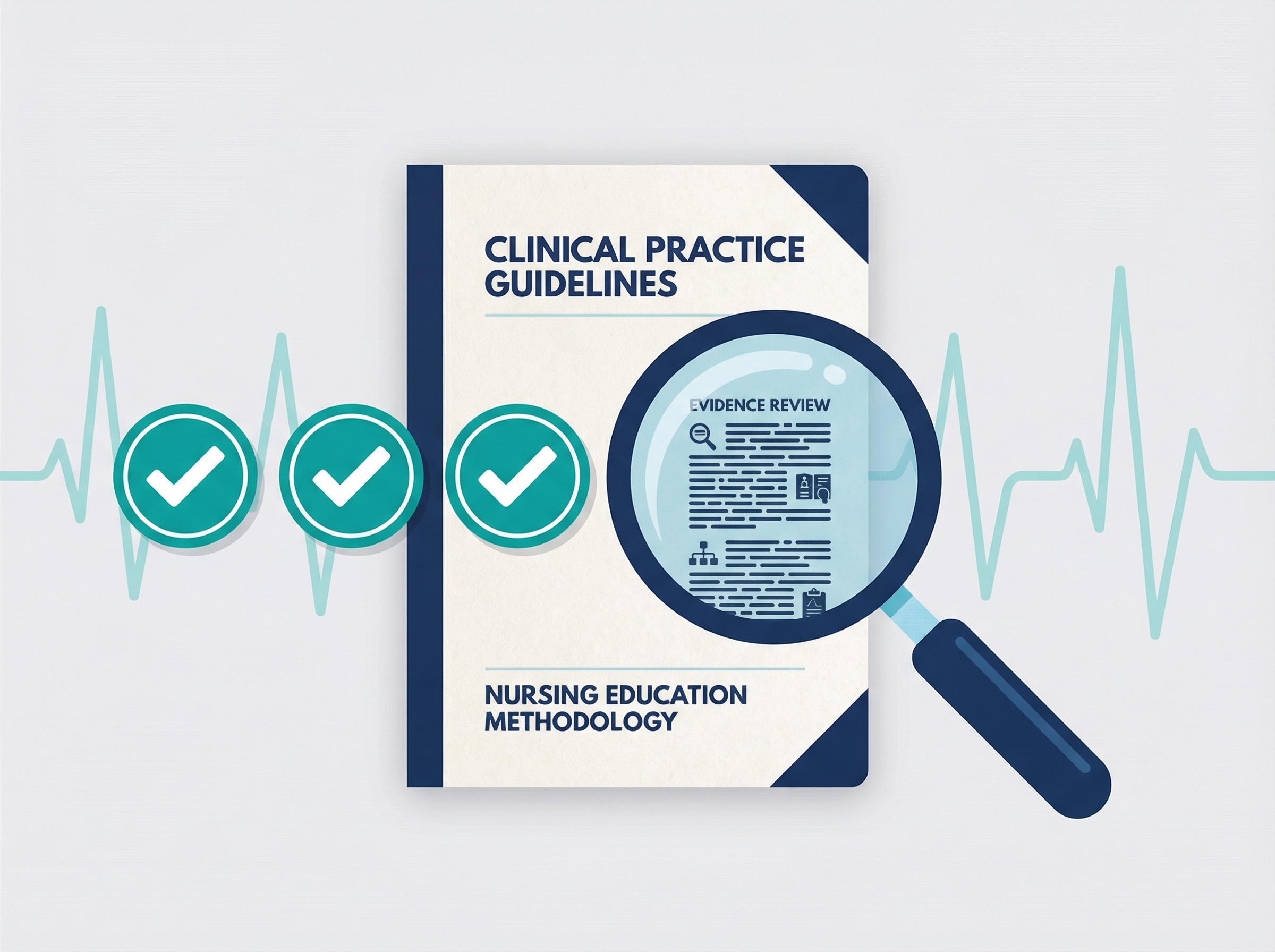
Exam Construction Standards — Enforced, Not Suggested
Most board prep question banks are written once by a content team and updated infrequently. The exam construction standards that separate a rigorous question from a poor one — distractor symmetry, balanced answer distribution, clinical scenario authenticity — are rarely applied systematically.
CertReady enforces these standards through automated audit gates that run before any question enters the bank.
Distractor Symmetry
All four answer options must fall within 20% of each other in word count. The correct answer is not longer or more detailed than the wrong ones. You cannot identify the right answer by scanning for length — you have to reason through the clinical scenario.
Answer Distribution Integrity
Correct answer positions are held between 20–30% per letter across each question set. No single position exceeds 30% of total questions. No five consecutive questions share the same correct answer position. Your study builds clinical knowledge — not positional intuition.
Three-Phase Self-Correction
Every question goes through a three-stage internal review before entering the bank: draft generation, self-critique for ambiguity and distractor logic, and final revision. The bank receives the polished output, not the first draft.
Audit Gate Before Deployment
An automated audit gate runs before any question enters active rotation. Questions that fail distractor symmetry, answer distribution, or clinical accuracy checks are rejected and revised — not flagged for later review, not deprioritized. Rejected before you see them.
Built by Someone Who Sits on the Same Side of These Exams You Do
Paul Logan, PhD, CRNP
Cardiovascular Nurse Practitioner, WellSpan Cardiology
Paul Logan has trained acute care nurse practitioners for decades and maintains an active clinical practice in cardiology. He graduated from the University of Pennsylvania in 1994 as one of the first ACNPs in the country.
The clinical accuracy standards in CertReady are the standards he applies in practice. The scope-of-practice distinctions between ACNP and FNP tracks are built from 30 years of clinical experience. The distractor symmetry rule exists because he reviewed AI-generated content, identified the flaw, and fixed it before anything went near students preparing for high-stakes exams.
CertReady questions are not written by a general content team or sourced from a generic nursing question database. They are written to the exam blueprints by a clinician who treats patients, trains APPs, and understands what clinical reasoning these boards are designed to assess.
Credentials
- PhD — Nursing, Quality and Outcomes
- CRNP — Certified Registered Nurse Practitioner
- University of Pennsylvania, 1994 — one of the first ACNPs in the U.S.
- 30+ years cardiology clinical practice
- Cardiovascular Nurse Practitioner, WellSpan Cardiology
Questions About the Methodology
Are CertReady questions written to AANPCB and ANCC exam blueprints?
Yes. CertReady questions are written directly to AANPCB and ANCC content domains and task statements for each exam family. ACNP-track questions map to the ANCC AGACNP-BC and AACN ACNPC-AG blueprints. FNP-track questions are dually aligned to both the AANPCB FNP-C and ANCC FNP-BC blueprints. Questions are not adapted from course lectures or textbooks — they are written from the blueprint up, targeting the clinical reasoning each board exam is designed to assess.
How does CertReady ensure the clinical content is current?
Every CertReady question carries a clinical validation date. An AI-assisted audit system reviews rationale content against current ACC/AHA, ANCC, and AANPCB guidelines and flags content where the evidence base has shifted. Questions that fail the audit are pulled from active rotation until they are corrected, revalidated, and redeployed. Board candidates are not served rationales that quietly reinforce outdated clinical practice.
How does CertReady prevent the "pick the longest answer" problem?
CertReady enforces a quantitative distractor symmetry rule: all four answer options must fall within 20% of each other in word count. The platform audits every question before it enters the bank. The correct answer is not longer or more detailed than the wrong ones. Questions that cannot be answered by length-scanning require genuine clinical reasoning — which is exactly what the board exam requires.
Who writes and validates CertReady questions?
CertReady was designed by Paul Logan, PhD, CRNP — one of the first ACNPs in the country (Penn, 1994) and a clinician at WellSpan Cardiology with 30+ years of active practice. The clinical accuracy standards and exam construction rules reflect his work as an ACNP treating patients. Questions are not sourced from a generic nursing database.
What happens when clinical guidelines change?
An AI-assisted audit system continuously reviews CertReady rationale content against current clinical guidelines. When a guideline recommendation changes — a revised treatment threshold, an updated ANCC competency standard, a new drug approval — affected questions are flagged for clinical review and pulled from rotation. They are corrected, revalidated, and redeployed. You study with current content.
How is CertReady different from other NP board prep products?
Most board prep products use question banks that were written once and updated infrequently. CertReady enforces distractor symmetry (correct answers are not identifiable by length), balanced answer distribution (no positional bias across A/B/C/D), and clinical currency through AI-assisted guideline drift detection. Every question maps to a specific AANPCB or ANCC content domain. The questions are written and validated by an ACNP in active cardiology practice — not a general content team with no direct relationship to the clinical standards these boards assess.
Start with the Free Mini-Diagnostic
25 questions. No credit card. See exactly where you stand against your exam blueprint — before you commit to anything.